Movies/ Mouthing Off/ A Miscellany

Movies/ Mouthing Off/ A Miscellany
Showing posts with label Grace Lovelace blog. Show all posts

Friday, July 22, 2016

Ghostbusters, Trolls and Trump (Oh My!)

ghost graphic.jpg


The 2016 update of Ghostbusters with women in the lead roles loosed some kind of internet poltergeist long before it was even filmed. After the announcement in 2014 legions of the underemployed and over-opinionated flooded the interwebs with their plaintive cries. In a cinematic landscape flooded by reboots, sequels and superheroes, this film, as yet unmade, seemed a veritable red flag in the face of the bulls. The momentum gathered in particularly unpleasant ways; the preview for the new Ghostbusters garnered the most "dislikes" ever on YouTube (955,000 and counting).  Even the presumptive Republican nominee (he'll always be the presumptive nominee to me) got in on the act:


In early July, closer but still prior to the actual release, the IMDb ratings for the film took a nose-dive due to record numbers of "1" ratings by male users defending the faith.

What faith is being defended here, exactly?
ghostbusters.jpg


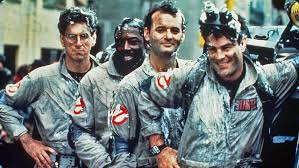
It was news to this moviegoer that Ghostbusters constituted a sacred text, but that seemed to be the upshot of the massive online backlash. At the time of its original release Ghostbusters was not critically lauded, yet it undeniably constituted a mile-stone of sorts -- relying on a large and famous cast and an aura of irony and camaraderie, the film rested less on an actual plot than on set-pieces and special effects. This was visionary in a way, in 1984, setting the template for the largely male-centered super-hero and action oriented films of the decades to follow. By the 1989 sequel, however, the sheen was off what never really became a franchise-- in this alone Ghostbusters distinguishes itself from what was to follow, where it is a truth universally acknowledged a blockbuster must never be followed by less than 4 sequels.
But SNL alums such as writer Harold Ramis and stars Bill Murray and Dan Ackroyd were a more anarchic bunch than their internet followers care to acknowledge. They had other artistic fish to fry at the moment and the film landscape was one of fuller possibility, with less need to be in a franchise semi-annually to underwrite a movie acting career (Robert Downey Jr. is addicted to the process.). The haters no doubt loathe the presence of original cast members in the new film; the overlap between the two generational iterations of the film is extensive, resting on deep affiliations with Saturday Night Live and a background in improvisational comedy. (In addition, Ghostbusters original director, Ivan Reitman, is on board this time as producer.) The question for the impartial reviewer (yawn, as if such a creature exists) is whether or not this Ghostbusters is worthy of the mantle.
The answer is: sure, why not. I'm happy to report that the reboot gets much of its comic energy off the the haters themselves. It seems the Male Deities of Ghostbusterhood don't necessarily share the same priorities as these Redditt assholes, and maybe that's why we liked them so much in the first places. After all, Saturday Night Live began in 1975, the heyday of feminism, more or less, and brought us the anarchic comedy of Gilda Radner, along with innumerable other female voices (even, it must be said, Victoria Jackson). When these dudes said, "Jane, you ignorant slut," is was a joke. Come to think of it, maybe that was the original source of  all this confusion.
Because Dan Aykroyd, Bill Murray and Ernie Hudson all make appearances here, seeming pretty much totally fine with women taking their roles (oh my!). The original director Ivan Reitman is back as producer, and the wraith of Harold Ramis, writer and ghostbuster, just whispered in my ear he doesn't give a flying fuck. In short, trolls, these dudes don't need you defending their honor. They ain't that delicate.
ghosties.jpg
The Internet


Ironically, where there lurked some danger of this movie being a lame re-boot, i.e. just another of Marvelous money-printing machines, the haters gave the project just the shot of anarchic energy it required.
Apparently the backlash came early enough in the process that the writers (director Paul Feig and Katie Dippold) were able to incorporate the whole thing into the film itself. Appropriately in the selfie-referential age, the new ghostbusters frequently monitor themselves on social media, where they encounter helpful feedback like "Ain't no bitches gonna hunt no ghosts." They mostly don't react since they have bigger demons to fry. But lucky for them the larger narrative works perfectly as a rejoinder to the subterranean trolls: who are these hungry ghosts lurking in the underground networks (subways) and being channeled through an odd little muttering men? Just the question many of us ask as we peruse the comment sections. The fact that they confront them, use improvised weapons to contain them, and come out the other side stronger and more famous, is on some level a satisfying feminist allegory. Thanks to the ether realms must go to Harold Ramis, who wrote not only the original film but Groundhog Day, the film that showed that comedy itself can be an infinitely roomy and philosophical genre. Maybe that's why it has become such contested territory in the brutal cultural wars of our age. (Methinks it's no coincidence that a bunch of theater-goers were gunned down at the Amy Schumer comedy Trainwreck.)
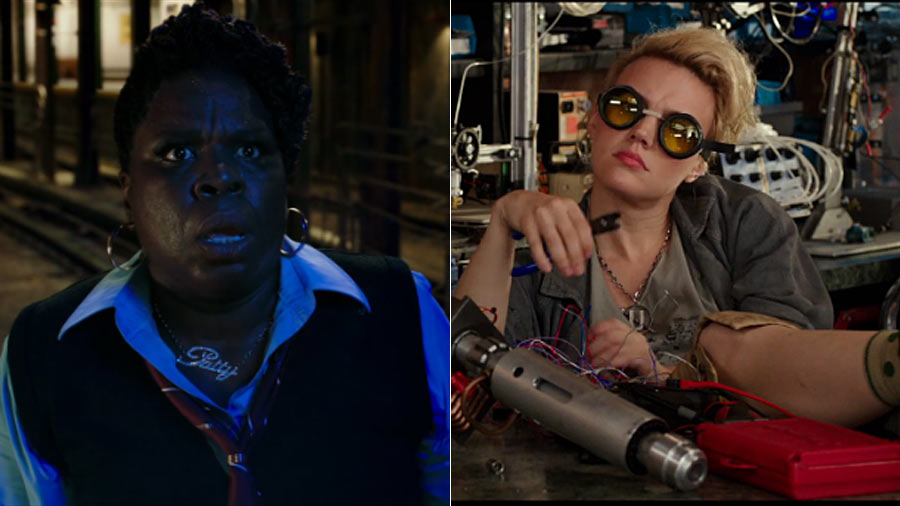
I just read Anthony Lane's tepid defense of the film, decrying the online hatred but basically saying the new crew isn't as laid-back and "funky" as Bill Murray et al. (As our premier laconic cultural critic, Lane is eminently qualified to monitor proper levels of "I don't care.") I think he's wrong though: coming off very good streaks, both commercially and artistically, Kristen Wiig and Melissa McCarthy seem very relaxed. This isn't make or break for them. They can just enjoy the jokes and the costumes, and we can enjoy them with them. In fact, the first scene features Wiig stretches on stage in a silly Ivy League suit, limber as a cat. "Big lecture in the main hall," she intones. As if. The other two SNL cast members, who I was unfamiliar with, bring a little more urgency to their roles. Kate McKinnon is being hailed for her oddly electrifying performance. To me she seemed like a minion made flesh, the cute underlings that took over the franchise.
kate.jpg


And as far as Leslie Jones is concerned, it's impossible not to mention the viral racist attacks on her that forced her off twitter this week. If it seems like I haven't really talked about the movie enough, you're right--for both good and ill, the making and reception of this movie are more important than the  movie franchise.
Franchise. Disenfranchisement. That's what it's about at this point. I was chatting to a dad I know about the film (he knew I was blogging about it), He asking what my "take" was and if he should take his daughter. Meanwhile the media savvy moms I knew had already been there and done that, and their daughters were already plotting which ghostbuster to be for Halloween. So yes, go~

--Grace Lovelace

Thursday, July 23, 2015

Trainwreck | Film Review

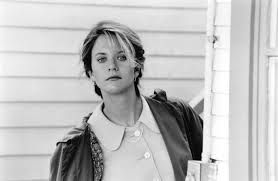
meg.jpg
Meg Ryan making stalking downright cute


Once upon a time I was talking to Julia Sweeney about how I had enjoyed the Meg Ryan vehicle French Kiss, when I noticed she seemed fairly unenthusiastic in her assent. When pressed, she explained “It was okay, but why is it always actresses instead of comedians in these movies ?” Her objection, obvious once it was voiced but invisible until then: the casting of actresses in romantic comedy revolved, predictably, around their prettiness. Then Michael Eisner says there are no funny women. That's called The Circle of Life, kids.
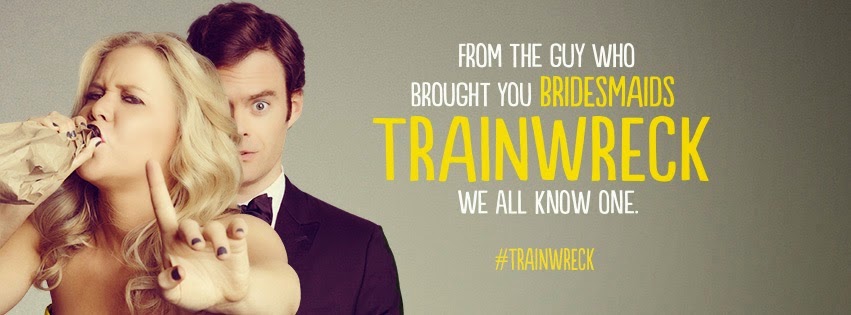
trainwreck.jpg


The poster to Trainwreck announces that this is not Sleepless in Seattle. If you are looking for an ingratiating, non-threatening female lead you’ve come to the wrong place.
From the ho-hum response of most reviewers, however, it seems like they mostly didn't notice. It’s just a, you know, romantic comedy. Nothing to see. It turns out she ends up with the guy. How boring is that?  
To which I reply: if you don’t want the girl to end up with the guy, ever, romantic comedy might not be the genre for you. ( Incidentally, the two reviews I happened to stumble upon also happened to be by men,  Anthony Lane and Joe Morgenstern. These dudes take a massive number of cunnilingus jokes in stride, that's all I can say.)


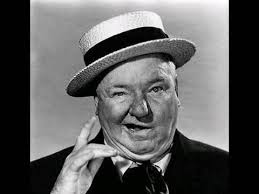
Do we ask whether Marx Bros. or W.C. Fields films have challenging  plots, or even plots that make sense? And if so, where does the harp playing come in? The most subversive comedic approach has been to regard the plot only as a vehicle for delivering funny lines (an approach Anthony Lane should appreciate, incidentally, given how difficult it is to discover his verdict of any given film. What are moving pictures, after all, but occasions for witty put-downs?). To cite one example, W.C Field’s Never Give a Sucker an Even Break, about a guy trying to peddle a script he has written in Hollywood, the bare-bones, self-referential comedy plot doesn’t pose a problem in itself.


fields.jpg
W.C. Fields of course

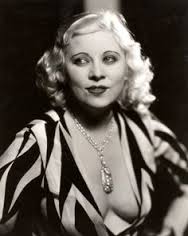
Come to think about it, something about Amy Schumer, maybe the bibulousness,  is very reminiscent of W.C. Fields. Or better yet, Mae West, whose rubbery face, va voom body, and major attitude place her out of the realm of mere actors and into that of attitude peddlers like Schumer. Give this woman a cigar and a gold lame gown. . .


mae.jpg
A young Mae West wrote and produced her own material


Like Fields and West, Schumer writes much of her own material, and though the script is predictable at times, it provides some delightful twists. Her casting of Tilda Swinton as the British editor of an outrageous online men’s magazine called S’Nuff, a sort of female Nick Denton , is a particularly nice touch . And the scenes of eager young reporters trying to outgross and inappropriate each other seem especially prescient given these week’s meltdown at  Gawker.


And casting herself as a reporter for S’Nuff allows Schumer to explore her character’s edginess, while simultaneously turning the cutesy  usual professions of romantic comedy heroines -- gourmet cupcake baker is a popular one -- on their ass. The over-the-top nature of the new media is a great satirical subject, adding some heft, as well as a needed update to the romantic comedy genre, which frequently seems to be stuck in early sixties Pillow Talk mode.


Romantic comedy has suffered from an image problem for at least the last few decades (probably not a coincidence it is a genre almost entirely centered on women). If the Reeses and Sandras want to win their Oscars, they better not tarry in that part of town too long, whatever the financial rewards. Judd Apatow, the director of this film as well as producer of many other innovative, women-centered efforts, including Girls and Bridesmaids.
Not to belabor the point, but the true formula for the success of Bridesmaids was, in a word, Kristin Wiig. A woman drawing on years of experience writing and performing (from Saturday Night Live, as opposed to the Pilates studio) was finally being allowed to strut her stuff in a romantic comedy. When that exploded, Apatow reinvested in Schumer. And so on, and so on. . .until one day,ideally, we get our Sarah Silverman rom com. That will be a real happy ending.


--Grace Lovelace


Saturday, March 21, 2015

The Wrecking Crew Documentary: Netflix Movie Review

crew.jpg
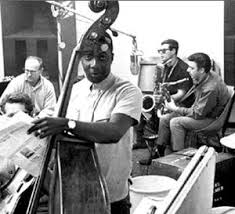
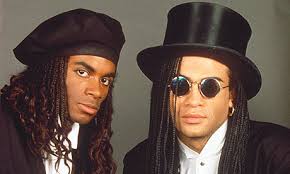
There’s a great moment in The Wrecking Crew  where several members of this legendary group of studio musicians, reunited decades after their heyday,  bring up the group Milli Vanilli (though the sexagernarians keep getting the name wrong). They chortle over the idea that good looking front people who don’t actually make the music constitute a “scandal” -- twas ever thus, say their insider smirks. They should know, under the aegis of record producers like Phil Spector and Lou Adler, they created most of the hit songs of the sixties--arguably creating the sound now known as rock and roll. These are the actual human beings who made up the famous "wall of sound."
vanilli.jpg
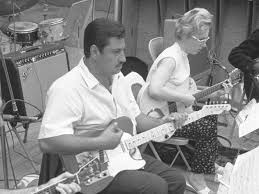
As described in the film, the Wrecking Crew was a loose group of 20-30 musicians who, given a simple pop melody, could punch it up and make it a hit. While you might expect that such a film would be about the essentially plastic and interchangeable nature of commercial music (after all, how can the same group “be” Nat King Cole and the Byrds), it turns out to have a surprising warmth to it. This is probably partly because the film was made, over many years and much scrambling for funds, by the son of one of the crew, the guitarist Tommy Tedesco. Tommy Tedesco seems to have been a cutup as well as a virtuoso guitarist, and, at least as presented by his son Denny Tedesco, to have been part of the glue that held the group together.

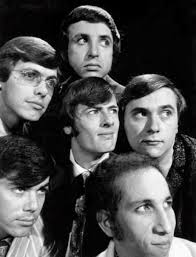
The other thing, of course, was the enormous amounts of money they made working 18 hour days, producing mountains of hit material. It was only much later that they, and their families, bemoaned the fact that their names were seldom on the historic records they created--that honor went to the Association, the Monkeys, and the Fifth Dimension and other assorted Milli Vanillis.
association.jpg
The Association
guitar.jpg
Tommy Tedesco and Carol Kaye

One of the pleasant surprises of the film is that early rock and roll was actually much more integrated than those college boy album covers would have had us believe. It seems to have been a true meritocracy, with everyone more or less welcome as long as they were cool and could produce the work. It seems the ears of Americans were ready for more integration than their eyes could take in.
The backgrounds of the musicians add to our understanding of the music as well. Most came from diverse but deep musical backgrounds -- Carol Kaye had a mother who played piano in movie houses; Plas Johnson grew up in New Orleans with musician parents who found peak employment (one during the night and one by day) playing for the constant stream of soldiers in WWII. He became a saxophonist, first working at 12 on a Mardi Gras parade. Drummer Hal Blaine talks about how he achieved the focus and concentration he needed for endless studio session during his early as a drummer at strip clubs. Almost all of them came from jazz, and many cite that form of music, not rock and roll, as their original vocation.

The film comes as an important corrective for those interested in the history of pop music. Even after all these years, however,  this still feels like somewhat dangerous and disputed territory. The people most willing to talk on camera are give credit to these foundational players tend to be singers, like Nancy Sinatra and Cher, with little at stake in pretending they did it all themselves. Most generous, perhaps, is Brian Wilson, who talks about how utterly central Wrecking Crew were to the legendary Smile recordings. Of course that album went on to influence to course of pop music to come, inspiring The Beatles, among others, with the possibilities of the genre. (That Wilson simultaneously gets to note how little other official Beach Boys members had to do with the Beach Boy sound is a not-so incidental bonus.) Other groups featured prominently on the poster--Simon and Garfunkel, the Mamas and the Papas--are notably absent as commentators. It seems not everyone is quite ready to revise their own history as pop auteurs.


In spite of this willful effacement, however, the Wrecking Crew (both group and documentary) ends up making musicians look damn good. They  were undoubtedly shortchanged on the credit they deserved given that their improvisation, looseness and familiarity with each other elevated frequently  rote tunes and brought them to life. On the other hand, these were incredibly well-paid studio musicians. They ended up with mansions, rolls royces and yachts, and all while retaining their anonymity.The absence of the corrosive effect of fame, along with the built in impetus to get along (no one was irreplaceable), seems to have allowed the group to work together, over incredibly long hours, without any of the tantruming seemingly built in to supergroups. Furthermore,  the film was finally completed, and the complicated permissions for the 110 songs soundtrack procured, with funding from “music brass” Herb Alpert and Jerry Moss.
For those of us still hopelessly in thrall to pop music a half a century later, The Wrecking Crew is essential viewing.


--Grace Lovelace

.  

Thursday, January 1, 2015

Now on Netflix Instant: Photographic Memory/ Stories We Tell

For some reason, I’ve always had a soft spot for the documentary Sherman’s March (1985). It’s not actually about Sherman or the Civil War, but instead is a resolute avoidance of its declared topic. Ross McElwee somehow procured funding for a documentary on the lingering effects of Sherman’s merciless campaign 1864 campaign through the South, and then spent it making, well, I'm not sure how to characterize what he ended up with.


Anything I know about Sherman and the Civil War, I most assuredly did not pick up from McElwee’s fly-away, free-associative film, which devolves into a series of monologues on procrastination broken up by flirtations with a series of Southern, well, I wouldn’t exactly call them belles. The most entertaining among them (with some possible competition from a hippie-linguist completing her thesis on a deserted island in the Carolinas)  is Patricia “Pat” Rendleman, a beautiful nutcase, I mean aspiring actress, who allows McElwee to film her rollerblading, doing freeform Jane Fonda era calisthenics, swimming, and roller-blading some more in a series of provocative early eighties outfits.
pat.jpg
Patricia "Pat" Rendleman


Unfortunately, Rendleman takes off for Atlanta in pursuit of the elusive Burt Reynolds, whom she somewhat mysteriously considers the key to her personal and professional future. She’s deaf to McElwee’s claims (borne out by a quick look at IMDB) that his film could in fact be her big breakthrough.
His picaresque adventures through the South and its women continue,  completely independent of the Civil war, apart from some vague gesturing on McElwee’s part. The whole thing is less Ken Burns and more proto-reality show -- sort of Annie Hall meets The Real Housewives of Atlanta.
Given my excessive attachment to Sherman’s March, I was pleased to discover a newer effort, Photographic Memory (2011) available for viewing on Netflix.


Photographic Memory finds McElwee having abandoned all historiographical aspirations, but carrying a good deal of baggage. The 25 year interval following Sherman’s March finds McElwee a family man; indeed, the film is dedicated to his son, Adrian, who is its major subject. Photographic Memory alternates footage of him as a beloved toddler and young children with that of the intractable adolescent McElwee believes he has become. Their previously idyllic relationship has become fraught, as Adrian ceases to gaze adoringly at his father and begins to pursue his own interest in making extreme sports videos, filming himself skiing backwards while stoned and similar stunts. “How many teenagers have been saved by our visions of the beautiful children they used to be, “ intones McElwee in his familiar Southern twang, his voice gone sour.

Not that McElwee has lost his taste for the broader gesture--running through his commentary about his son is the suggestion that his son’s problems--specifically his scattered attention and his servitude to electronic devices--are those of an entire generation. From his newfound position of gravitas McElwee diagnoses his son, and his entire cohort, with ADD.
skiing.jpg
Adrian McElwee in extreme sports mode
For someone who watches the two films in tandem, the ironies come thick and fast.The flippertigibbet of Sherman’s March has become the elder statesman of Photographic Memory. The crazy part is that  essentially Sherman’s March is a paean to ADD and to flitting around at whim.
And it’s not like the middle-aged McElwee has outgrown these tendencies; though the film is, at its core, about his relationship with his son, he suddenly decides to take off to Brittany and revisit his own past as a photographer. Suddenly we are in a whole different story, concerning a swinging Frenchman’s fall from grace, replete with interviews with his widow and some of his lovers. While mildly engaging, it must be said: a lot of this plays like so much stoned backwards-skiing.
It’s easy to see where Adrian got these tendencies; one of the more perverse satisfactions of Photographic Memory is seeing into the areas of McElwee’s psyche where he appears most blind. On the other hand, his own blindness is part of the film. In the end the film, while fitfullly illuminating, has a lost, melancholic tone: this is the unmistakably creaky sound of aging in action.
If Ross McElwee’s insights as a filmmaking can feel wispy and incidental, with Sarah Polley’s own family documentary, Stories We Tell, we are in the hands of a commanding artist.

But Polley seemed to arrive that way. It made sense, at the beginning to see her as an “actors’ director” since she came from an acting background. (Her most famous film was The Sweet Hereafter, afterwards it seemed like maybe this had been some sort of apprenticeship with its intense, idionsyncratic writer/director, Atom Egoyan.)
Away From Her  drew an astonishing, Academy award nominated performance from Julie Christie. The concept itself of an aged women beginning to suffer from dementia also being chic and sexual itself seemed incredibly startling and provocative. (I can’t help but this that it was an influence on the current Julianne Moore release Still Alice.) 
Julie Christie in Away From Her

Polley adapted Away From Her from an Alice Munro story;by her next film, Take this Waltz, she was writing the whole thing. This almost willfully slight film also is quite innovative in its treatment of women’s sexuality and marriage. These themes make a good deal of sense when we learn about the dramatic story of Polley’s mother in her next film, Stories We Tell.
I don’t want to reduce the impact by giving away too much of Stories We Tell, since the pacing is highly dramatic. I will say there are major revelations throughout, including in the very last frame. That Polley chose to go from a successful career making feature films to making a documentary itself seems to upend convention; usually you’d expect a director to swim fiercely toward the mainstream.
But Polley has always seemed to enjoy defying Hollywood's social Darwinism. For my part, I don’t see why she isn’t a bigger deal; but, in a way, she doesn’t seem to crave Angelina Jolie levels of attention. Maybe that’s part of the documentary thing, besides having a fascinating story to tell; she is able to operate, still, somewhat under the radar of the culture machine.
Maybe it’s because she’s Canadian. In any case, I consider her a treasure, national or not.
[Sherman’s March, Photographic Memory, Take this Waltz, and Stories We Tell are all currently available on Netflix Instant.]

--Grace Lovelace

Sunday, August 31, 2014

The Hardest Working Biopic: Get On Up Movie Review


The musical biopic has proved surprisingly durable and accommodating. Who would have figured almost seventy years after the Cole Porter biography Night and Day (1946) would bring us Get On Up (2014), a picture just as tuneful and, in its 21st century way, just as dissimulating concerning the actual stuff of its subject’s life?
james brown.jpg
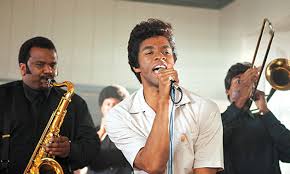
Chadwick Boseman as James Brown


In some ways we’ve come a long way since the days when Cole Porter’s sexuality was completely concealed in his own life story, even while hiding in plain sight in his lyrics. Get on Up, features a remarkable scene with a provocative, sexually transgressive Little Richard (Brandon Smith), as well as touching, albeit fleetingly, on some of the more painful aspects of the James Brown story: beginning with his abject poverty in Barnwell, South Carolina, though life in a Georgia whorehouse (run by his grandmother), and including incarceration as a teen for stealing a suit. Yet the genius(?) of Get On Up renders a term in a fifties jailhouse in the South as sprightly as the Yale Glee Club.


In fact, it all glides along so darn smoothly that I had trouble reconciling this James Brown with the man whose name appeared in eighties’ talk show monologues as a caricature of rock star excess and abuse. Get On Up has many virtues (I’ll get to those later), but verisimilitude does not happen to be one of them. While it might seem perverse to structure a movie about a man who famously ran through wives and band-members like water around the idea of his evolving interpersonal skills, insofar as Get on Up can be said to have a particular approach, this is it. (Director Taylor Hackford applies the same thick gloss matte here that he did in The Help,  a  style which renders even shit pie an amusing trifle. I’d say this was merely a matter of cinematography except that it very much extends to the emotional life of the characters. )


From a narrative point of view, it’s fascinating to consider the ways in which Get on Up both entertains and exorcises Brown’s volatile relationships. The film must deal with his monomaniacal control issues, but chooses to do so through the lens of two enduring relationships.
The first of these two totemic figures is based on long-time band-member Bobby Byrd, a real person. In the film, it’s Brown who helps secure early release from jail for the talented young singer, and, even as the rest of The Famous Flames, the group with whom Brown makes his first recordings but which disbanded as Brown increasingly seized control and credit. Byrd, a real person, also represents a rationale for Brown’s dictatorial behavior within the band. In several key scenes where Brown repeatedly fines, berates and otherwise is borderline abusive with his band, Byrd is shown loyally sticking with his friend even as others depart in droves, muttering imprecations.  
Byrd was in fact a real musician, but within the film he is very much the audience’s stand-in, justifying with his presence and periodically with noble speeches, why we might want to stick with this turkey over the long haul.
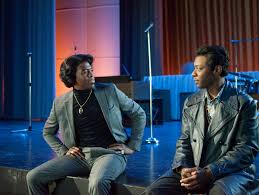
James Brown (Chadwick Boseman) with Bobby Byrd (Nelsan Ellis)


The answer, rendered explicitly on numerous occasions by Nelsan Ellis as Bobby Byrd, is that James Brown is a remarkable genius who will be remembered by history. Byrd is seen as wisely seizing his chance to support someone truly exceptional, continuously reinforcing this point by his own ongoing presence in the film while legions of other musicians fall by the wayside, whiny and exchangeable.
This rendering is plausible, sort of true, and also highly strategic. While focusing on a musician of mediocre talent who is content to remain a supporting player to one of history’s greats, Get On Up discounts the contributions of the many extremely talented players who went on to successful music careers of their own. Included among these is Bootsy Collins, whose name is ever-so-briefly heard in the air, but who receives almost no screen time.
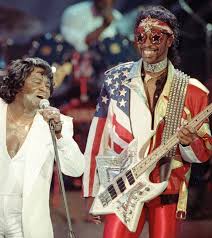
Real life James Brown with equally real Bootsy Collins


In real life, Collins has recounted how at first he adored Brown as the father he never had, then, in light of subsequent experiences, decided fathers were on the whole overrated.
Collins’ story, willfully excluded in the film, shows that the circuit of Brown’s creativity did not work in one direction: he drew enormous amounts from the young, energetic performers he was so good at attracting, but through his inability to collaborate, invariably forced to move on.


But at least there was a Bobby Byrd, and he did stay in the band longer than most. The way the film treats Brown’s wife, DeeDee, moves much closer to actual deception. For one thing, the movie leaves the distinct impression that Brown had one early marriage, then moved on to the woman with whom he spent the rest of his life (In reality, Brown was married four times.). But more troubling is the film deals with Brown’s violence toward women, unavoidable since it erupted very publicly at various points in his career.
Get on Up  deals with the subject in a pair of very deceptive scenes. In one, Brown generously, if maybe a bit ostentatiously, hands out silver dollars for Christmas in front of the impressive house he’s acquired, spies a white neighbor looking down DeeDee’s low-cut elf suit. When they go in the house, a confused and upset Brown hits DeeDee, who we then see weeping on the floor. In a paired scene, however, Brown once again berates DeeDee for looking too sexy and available at a party and seems on the verge of striking her again. Instead she deflects him with a joke, and they begin a pre-coital dance on the bed.
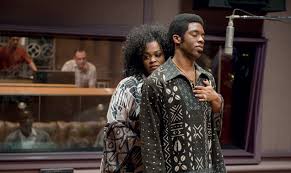
Loyal wife DeeDee Brown (Jill Scott) holds James Brown (Chadwick Boseman)


Without any actual lies, we are given the emotional impression that the blows were an exceptional occurrence, one that was resolved as Brown and his marriage matured. The reality was more wives and more beatings.


The young British screenwriting duo Jez and John Henry Butterworth (brothers) have crafted an unusual, ever-shifting chronology that easily facilitates such sleights of hand. There are many admirable things about this structure, for one thing it lends a fresh feel to the storytelling. They don’t have to belabor the connections between early life and later behavior that quickly become tiresome in the usual bio-pic. The Butterworths make the admirable discovery that you can make the same point more powerfully and economically simply by juxtaposing the two points in time.


The Butterworths, who won a Writers’ Guild award for their screenplay about the Valerie Plame Wilson affair, Fair Game,  seem to have picked up a thing or two in their time with spies about the strategic deployment of information. When a simple shift in focus or tone can convey the intended impression, there is no need for the uncouthness of a lie. Whether they learned from Karl Rove that facts are simply what you need at the moment, or from Quentin Tarantino that they are simply an element of historical wish-enactment, postmodern cinema takes only the most passing interest in reality.


In that it resembles the old cinema: In any case, Get On Up is, righteously enough, more interested in Brown's musical legacy than his personal life. The film, rated PG13, is clearly intended to win over the several generations since James Brown held the world stage and helped invent rock and roll. Where Get On Up shines is in tracing the origins of the Brown’s music, and explaining non-didactically, what made it so different, and most of all, recreating the astounding performances which made his name.


M
In many ways James Brown, of all performers, is perfect for the screen. Known just as much for his stagecraft and, of course, his dancing, as for his actual songs, Get on Up really delivers in the performance scenes. With its extraordinarily engaging star, Chadwick Boseman, recreating the famous Brown moves while he lip-syncs to the actual Brown vocals, we get a sense of all the things that can’t be conveyed on a piece of vinyl, much less some disembodied electronic download. James Brown groupies like producer Mick Jagger, and co-star Dan Aykroyd are finally less interested in the specifics of a tortured life than in passing on an ecstatic and influential sound. They are less biographers in a strict sense than Fishers of Soul-Men.
History is written by the victors


This is hagiography with an infectious beat. And after several hours dancing in the dark in my theater seat, the film did its work. Count me a latter-day convert to the Church of Funk.

I was blind, but now I see. --Grace Lovelace